Showing posts with label martin scorsese. Show all posts

Saturday, December 21, 2013

The Wolf of Wall Street: Performance, Transaction, and the Big Sell


Martin Scorsese loves to watch Leonardo DiCaprio. I guess we’ve known that for some time, but it never quite hit me as it did during The Wolf of Wall Street. We can argue all day over whether this is an attempt to remake Goodfellas or whatever (it isn’t), but there’s one thing that’s pretty clear to me: This is as much one of Scorsese’s concert docs (Shine a Light, The Last Waltz, etc.) as it is one of his narrative epics. Jordan Belfort, the real-life “Wolf of Wall Street,” didn’t just become famous for his crooked financial practices; he was also renowned for his revival-like, inspirational speeches full of blustery bullshit to his workers. He sells stocks with messianic fervor; then he sells selling stocks with messianic fervor. It’s a perfect subject on which to hitch an extended DiCaprio concert. Half the movie is just him performing in front of people, and much of the rest of it is people reacting to him. There are even a couple of scenes one could call dance numbers.

(Spoiler alert for the rest of the review, to the extent that there can be spoilers for this movie...)

Thursday, March 22, 2012

Narration, Voiceover, and the Shape of the World


“I felt that people that frown on voiceover, it’s just a stupid thing. You think of the pictures that had voiceover, and they’re the best pictures ever. I mean, Citizen Kane, The Magnificent Ambersons, Jules and Jim. Jules and Jim is 90 percent voiceover. And The Wild Child. And even commercial films. Billy Jack had voiceover. Clockwork Orange. So that, “Show it, don’t tell it,” I think is a stupid reaction. You can be inventive in an independent picture with voiceover, and it’s one thing you can do that, in a large studio picture… they aren’t likely to do. And voiceover also helps you to cover an enormous amount of time...as long as you don’t use it the wrong way, and that is to cheat on exposition. And you can even use it that way and it’s just fine. You know, I really do believe that as long as a picture has the breath of life in it that it’s not going to matter what kind of mistakes you make, including the expository use of voiceover.” – Terrence Malick, 1976

Do we still treat narration and voiceover like proper filmmaking technique’s bastard step-child? People have been mouthing the “show, don’t tell” platitude for decades now. And it’s understandable: The desire to “tell” is often great, and it’s not a bad idea to combat convenience and temptation. But still. Forget the films Malick cites in the above 1976 quote and think of the ones we’d cite now, many moons later. Taxi Driver, Goodfellas, Malick’s own Badlands and Days of Heaven, Full Metal Jacket. Or avoid the film-snob brigade altogether and make your way down to Risky Business and/or Avatar, if you prefer.

Saturday, November 26, 2011

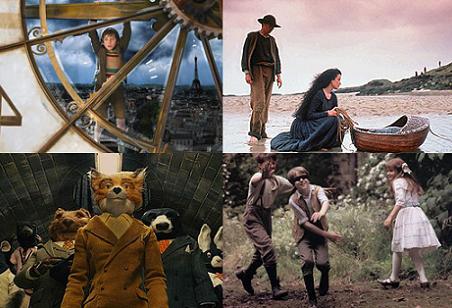
7 Kids' Movies by Great Directors Who Don't Make Kids' Movies


In honor of Martin Scorsese’s Hugo (which I’ll probably get to writing about one of these days), and also because I feel guilty about not having posted as much this month, here’s a quick list I thought up: Great kids’ movies made by great directors not known for making kids’ movies.

There are some willful omissions, so here's the obligatory disclaimer: I didn’t include Tim Burton or Terry Gilliam because so many of their films hover somewhere close to the genre, even when they’re being irredeemably adult and dark. I thought about including studio workman Roy Rowland, he of 5,000 Fingers of Dr. T fame, except that he had a lucrative career helming Margaret O’Brien pics so kids’ movies don't seem like they were particularly out of his wheelhouse. I also thought about including Fritz Lang and Moonfleet, but I don't know that Moonfleet is a kids' movie, strictly speaking.

And I know some folks will gripe about my not including Alfonso Cuaron and his Harry Potter entry here, but I first got introduced to Cuaron as the director of 1995’s A Little Princess (which I still think is his best film, believe it or not), so he always seemed to have one foot in this world.